How to get into London Fashion Week Without an Invitation

Most of the shows at London Fashion Week are only for invited guests, so it’s very hard to get in without knowing anyone inside. The entrance control with all it’s stressed-out security guards can seem quite daunting, and even if you do dare to ask them if you can get in, the answers are usually most unhelpful.

But there is a way for you to get in. Not many people know about it, but I’m going to share my story here.
I was loitering around the entrance of one of the shows (I didn’t even know which one it was), watching the dressed up VIP’s jumping out of black LFW Mercedeses. I didn’t want to go up to the security’s and ask if I could go in, it just felt too humiliating.

But after some time, a photographer jogged up to the barrier, apparently in a hurry. The guard pointed him around the back, so off he jogged, and I quickly decided to follow him. Eventually he found the back entrance, and passed security by showing his badge. So there I was, one step closer. I stood back and monitored the situation.

After a while, a knot of people formed around the securities, so they became confused, and I quickly pressed in among the group. They asked everyone where they needed to go, and I heard someone say “first floor,” so when the guard asked me, assuming I was part of the group, I said “first floor too,” with a very grave and sincere expression on my face.
That got me past the first barrier, and once I got to the first floor entrance, where another guard stood, I simply ignored her. After that came the registry desk: same thing there, just ignore it.
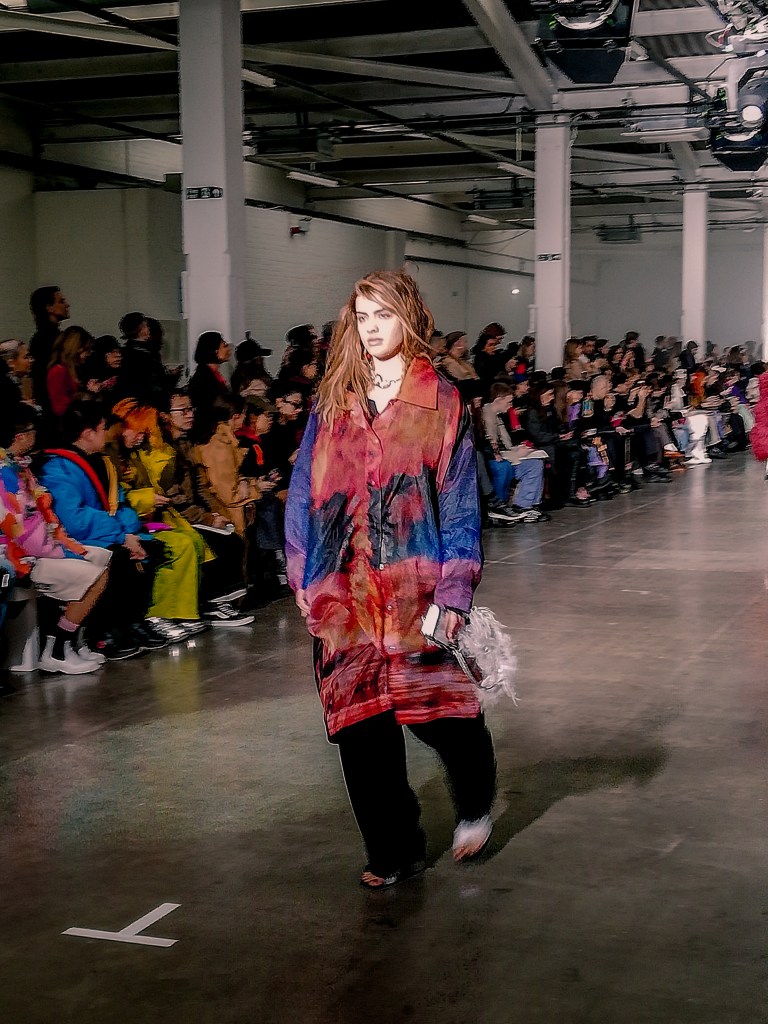
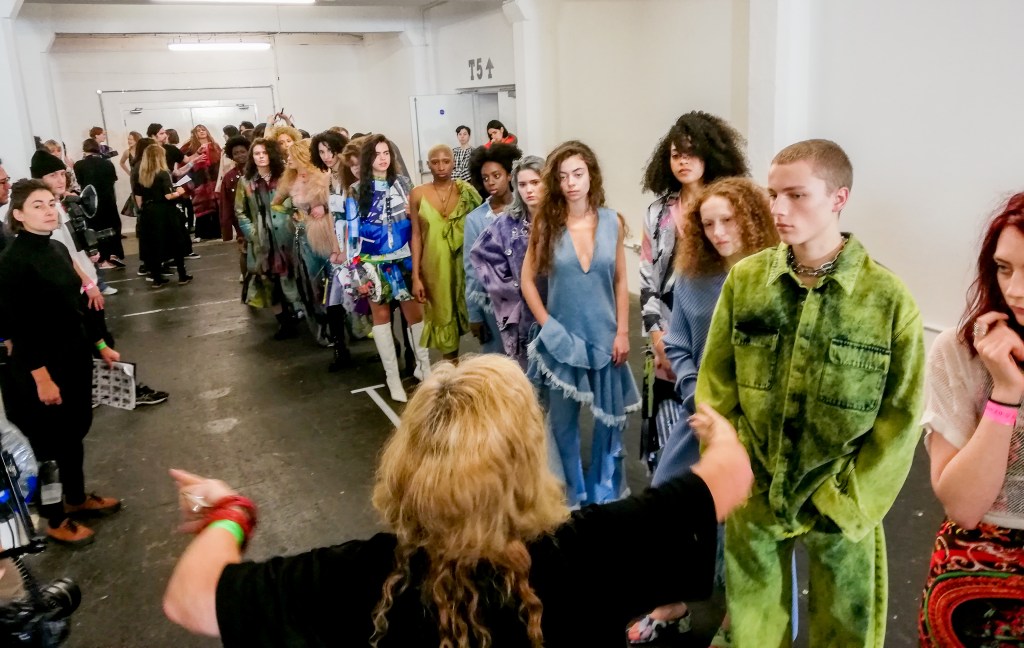
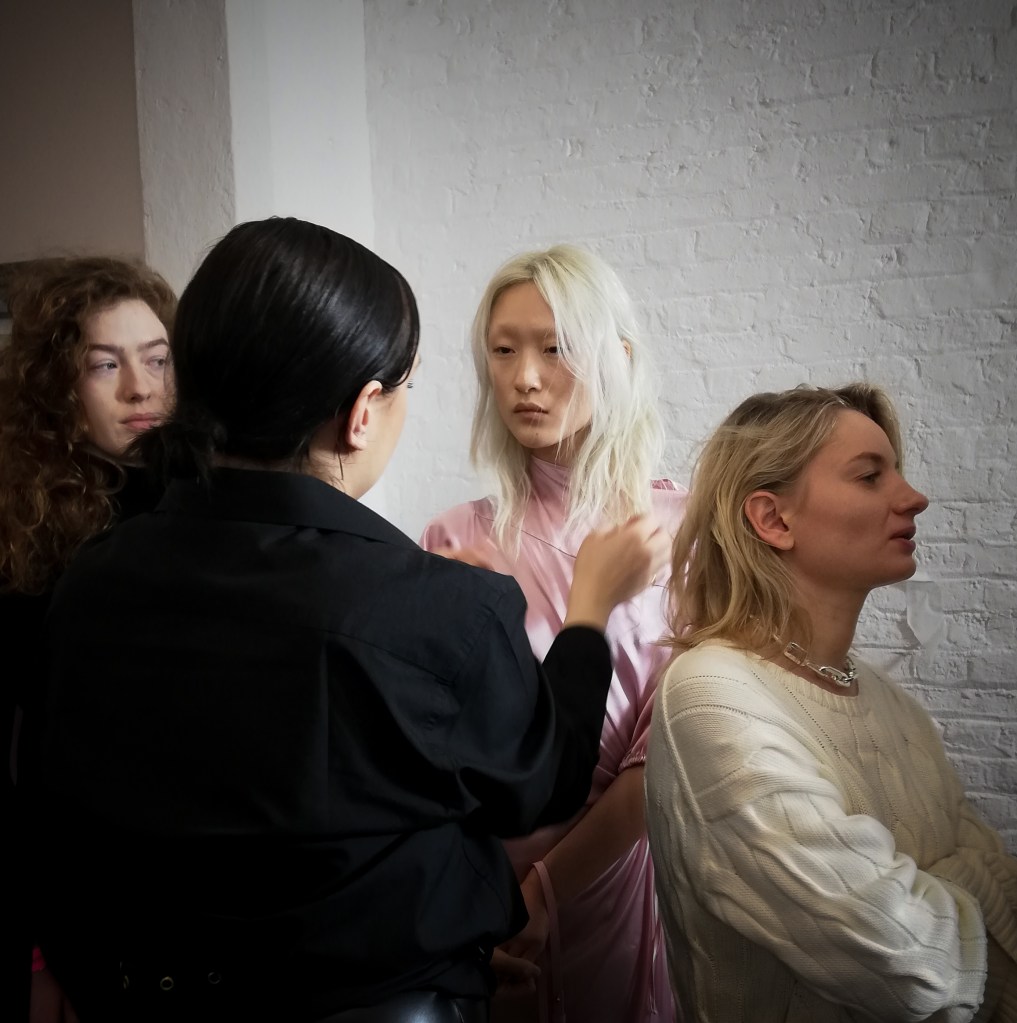
I found I was in the backstage area of the Marques Almeida show, with the test run in full swing. I took pictures of the models, asking them to pose for me. The only camera I had with me was my phone, since I hadn’t planned to do anything of the sort.
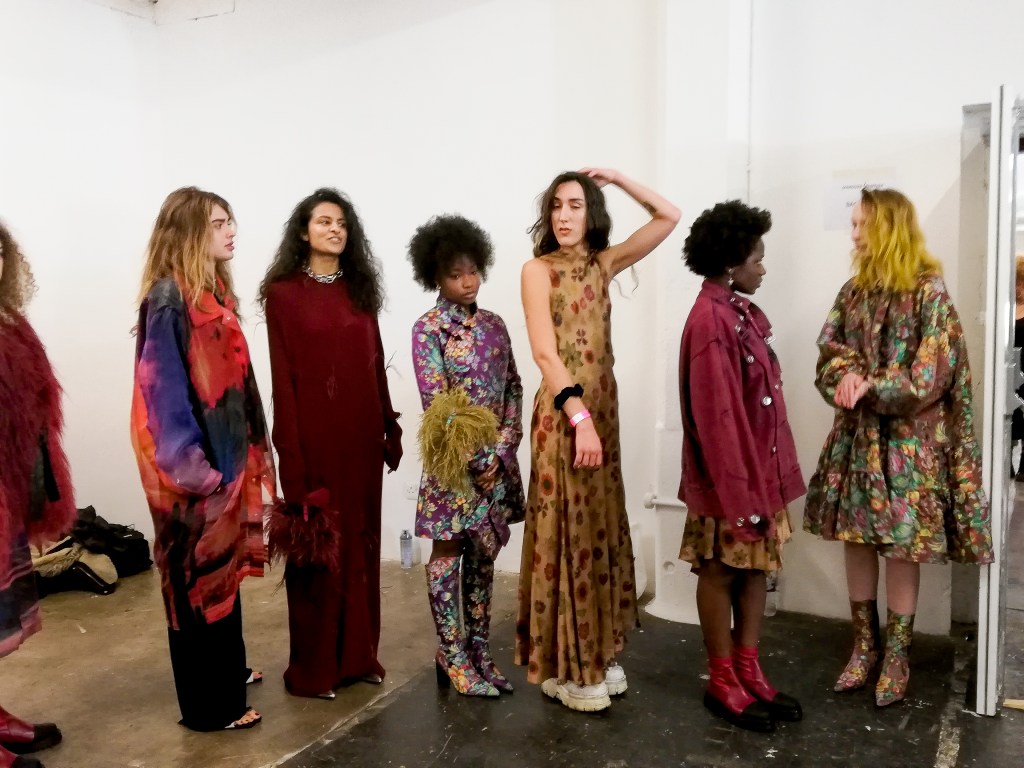
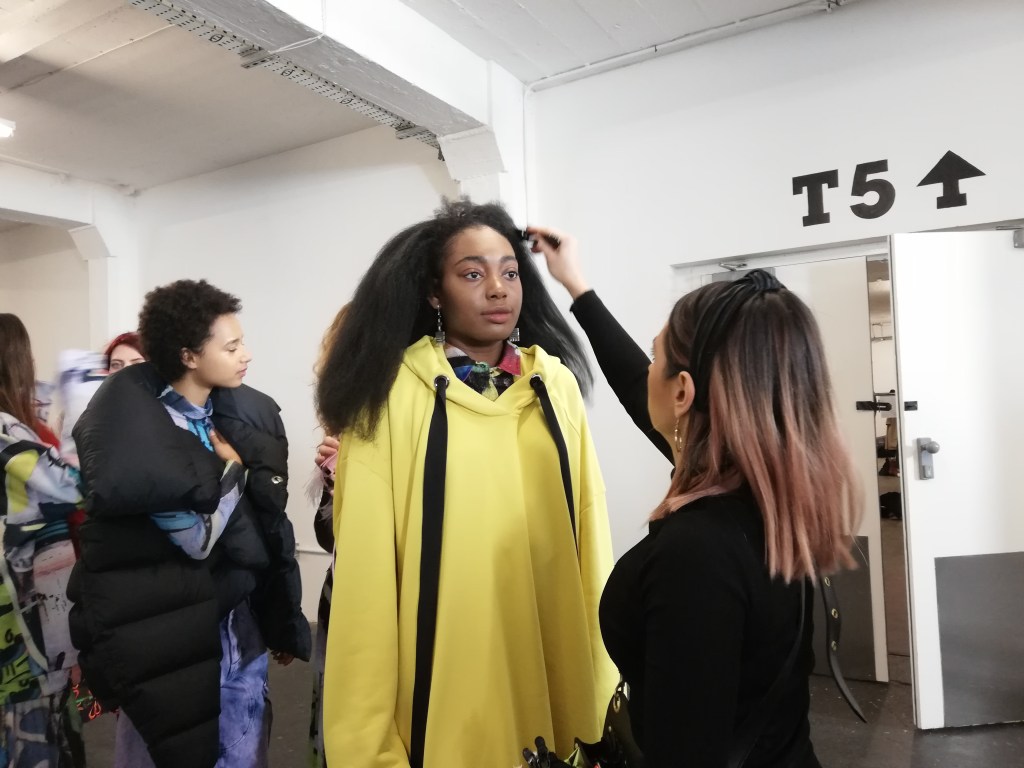
After that I walked with purposeful speed to the make-up and changing area, where the make-up artist Terry Barber was giving an interview. Through a back door I could enter the show room, where I sat in the photographers area, waiting for the show to begin. There was a number of security guards prowling around, and the photographers all wore badges around their necks, so I tried not to do anything suspicious, sticking to my seat on a pallet.
dav

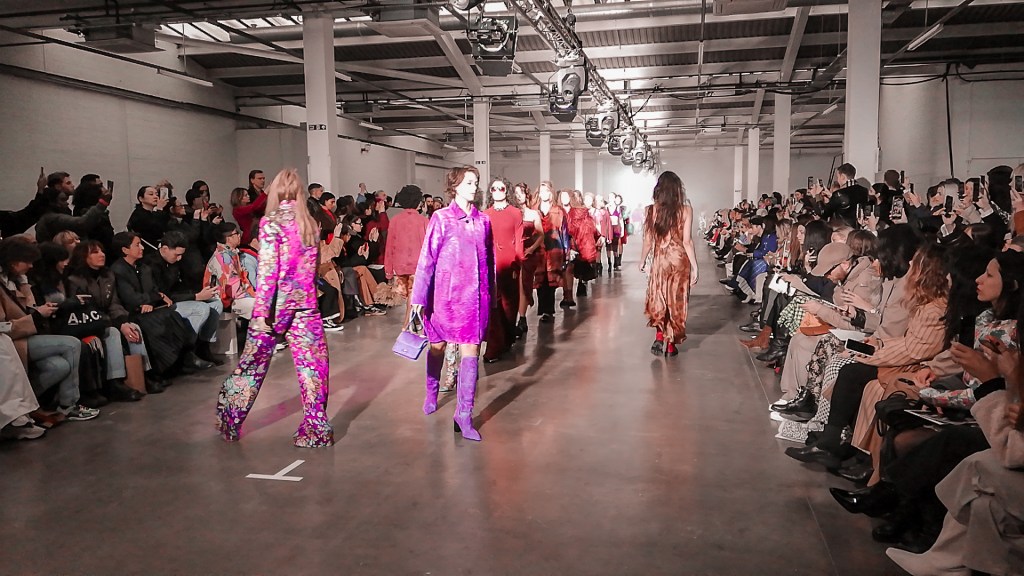
A long time later the guests streamed in and the show began. I realised I had chosen the best place to watch: right at the end of the runway, where the models spend most time.

As soon as creative director Paolo Almeida had given his bow, everyone jumped to their feet and made their way out. Now that I knew what the head behind the brand looked like and what his name was (I didn’t have a clue before seeing the notices on the walls), I was ready to give my own interview. I headed back to the backstage area, where Paolo was soon greeted by some chatty reporters, one of them working for Vogue. I let them go first, sticking my microphone out as well (nobody seemed to question this). As soon as they were done, I said: “Paolo, nice to meet you, can I ask you a question? Where do you think fashion is going in the future?” “I think hopefully in a better direction. That’s what we’re trying to do, to make the best out of this industry and try to make it the best…more…sorry, I got a bit stuck”, was his initial answer. Well, it was good to chat.

In theory I could’ve stayed for the next show, since nobody was checking anything inside and everyone was far too busy, but it was getting late…

Another way of getting into fashion shows, slightly more dishonest, was to get hold of someone’s ticket and photoshop your own name in. The guards would then scan your code, see that the ticket was real, compare the name on your paper with your ID and nod you in. That’s how it worked in 2019, it might not work anymore now, since so many students used the method.
Marques Almeida and the Message of Fashion

Autumn Winter 2020 collection

“Our inspiration is a continuous thing: We’re always obsessed with the idea of the “M’A girls”, the way they do their thing, where they go out, what they wear”, said Paolo Almeida after his show at LFW on February 15. “M’A girls” is what the brand calls the close community of followers it has built over the years, and they form an essential part of the brands purpose, and message. Last season the brand gave the beginning of the show to models and friends, to give their daughters something on the way for the future.

But it seems the designer-couple doesn’t just listen to the message it’s customers want to send, it also goes to the customer base for design inspiration. There’s a sort of circularity there. “We love having all these different personalities, putting them into a melting pot and coming up with a new story every season”, Paolo continues, explaining the variety of influences in the collection.

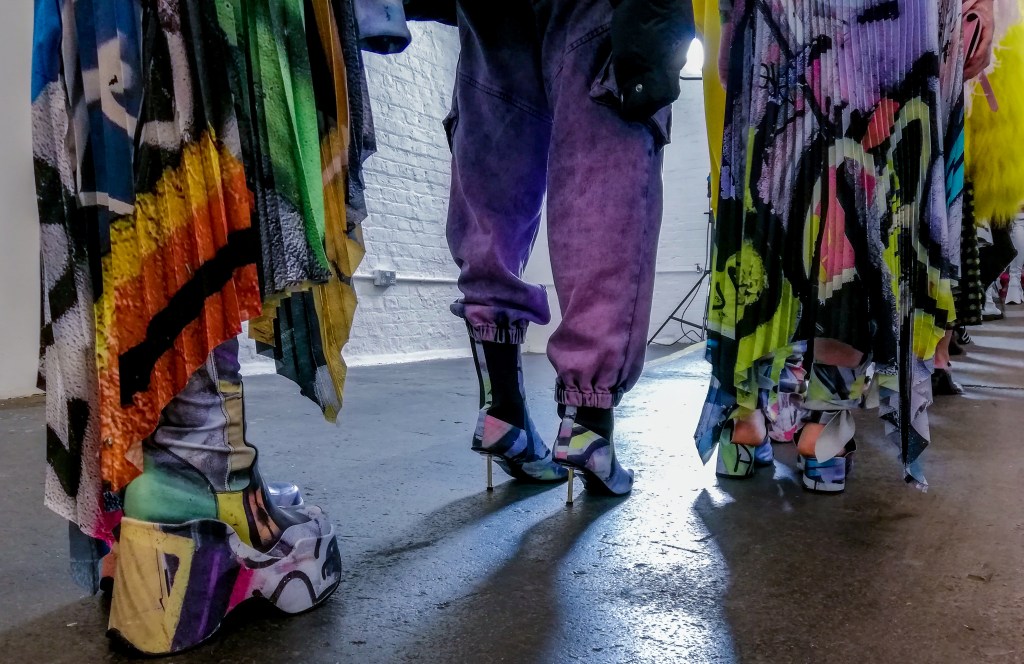
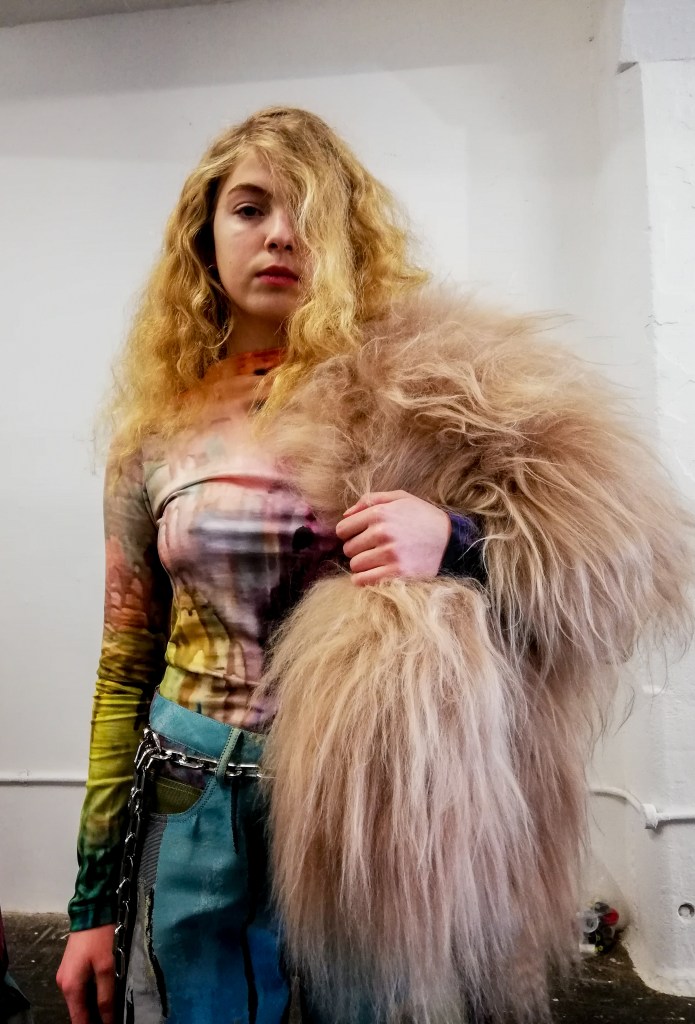
Starting off with simple silhouettes in a multicolour, custom-made jacquard, the collection goes on to a series of faded lilac and black pieces with graphic stripes. After that, elements of fur in acid tones, shredded and washed neon denim, multicolour airbrush prints are combined with shiny textures, translucent layers, asymmetric ruffles and platform boots to create a wildly youthful mix.
The make-up had a strong gloss and glitter to it, yet “done in a very Marques-Almeida way. It’s effortless, it’s a bit quirky and it looks easy”, comments the renowned make-up artist Terry Barber – a longstanding relation to the brand and part of the “family”, according to Paolo. The designer describes Terry’s makeup for the show as “something you could do yourself at home, nothing super professional-looking.” With this, he sums up the shows source of beauty in general. Sure, there was a large amount of glamour, but it never felt superficially elegant. Was it the slightly unpolished motions of the street-cast models, or their distinct features? Each of them seemed to radiate genuine personality, as they appeared out of the mist, accompanied by a resounding version of Pachelbel’s Canon.

As the designer of a young and optimistic brand, I felt like Paolo would maybe have a comment on the future of fashion. But when I asked him about it, immediately the instinctive guilt that most of the big brands have seemed to well up, the awareness of working in a plagued industry that shouldn’t be able to exist in its present form. Paolo’s promise: “We’ll try to do whatever we can to improve the fashion world, (…) to make the best out of this industry.” What’s the message fashion will have in the future? “Hopefully a better message. Being more inclusive, more sustainable, that kind of stuff really.”

Now I almost felt guilty myself, having forced these PR-buzzwords out of a designer who just wanted to create beautiful clothing. After all, in fashion there doesn’t always have to be a political after-taste. We loved the show, we loved the fashion, and we can admit that, even if it’s part of a despicable industry. But even so, this can be said: five of the looks where made out of plastic taken out of the ocean, imprinted with the remark: “It’s actually really important too.”

The Fashion Revolution Happening in Britain Right Now

Only just started off, these two sustainable fashion enterprises are determined to take on the big ones, convinced that sustainability can longer remain a “nice to have”.

Socko

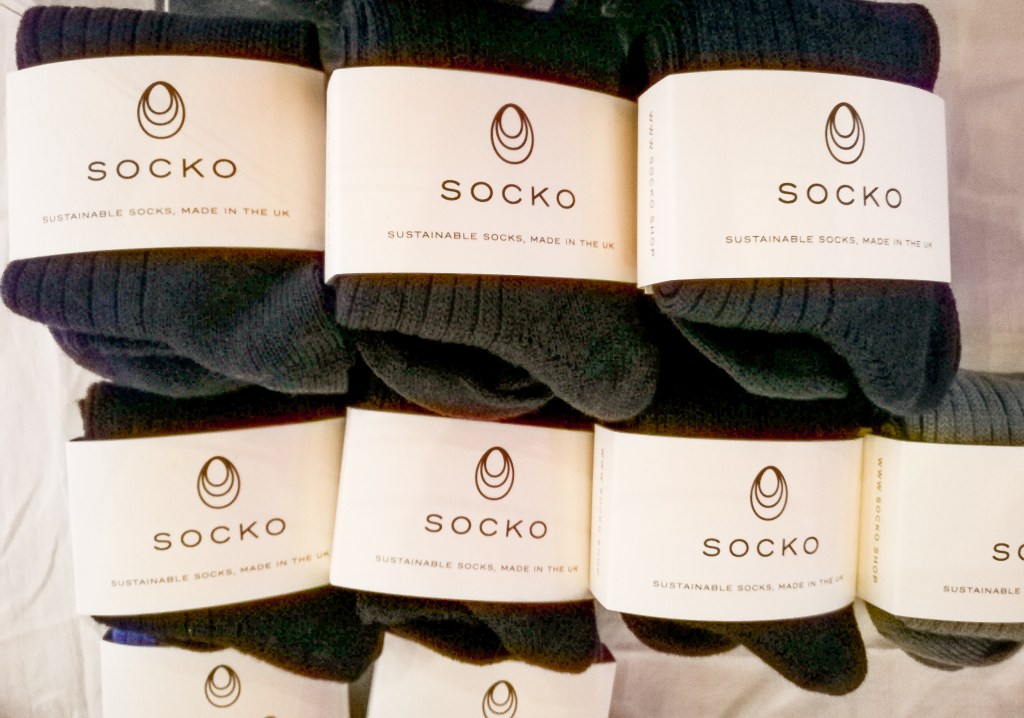
Socko makes sustainable socks, because the biggest impact can be made through the smallest piece of clothing, according to Emma, the head behind the business. I had a chat with her, and here’s what she told me:

“Essentially Socko came about as a combination of the things that I believe in; my sustainability, my ethics, my principles, aligned with the things that I love and I’m good at; knitting, my background’s actually branding and marketing, so bringing in that know-how as well, and then the third factor in that diagram of new business is things that people want to buy. Socks I particularly like because I see them as clothing rather than fashion. I don’t have to come out with three different ranges every year to keep on top of the latest trends. It’s something that I can do, and once they’re gone, they’re gone, and then we move on to the next. So it feels less disposable.

It’s also something that you wouldn’t buy second hand. Unlike with a lot of fashion which you can and should buy second hand, socks and underwear are just a step too far for most people.

So making a product that’s made to last is actually the best thing you can do, rather than just doing something that’s disposable. Even if it’s doing all the right things, if it’s just going to get thrown away, then you’re sort of shooting yourself in the foot. So I’ve made a luxurious product that I’m really proud of and that is made to last.

Was there a particular conversation or thought you had that sparked this whole idea?

It was a lot of post-it notes on my bedroom wall, in the strategy and coming up with it. But actually it was through a conversation with Wrap, who do a lot around sustainability; particularly they have a textiles wing. One of their insights was that actually it doesn’t matter what you make it with, it’s more making a product that’s made to last. The best way to do that is to reinforce and repair rather than through away. So this became a key component and kind of USP (if we’re going to get into the marketing – business chat of it) behind Socko. Making a product that can be repaired – well, that you love enough to reinforce and repair and extend its active life. A big part of our mission is to reteach the lost art of darning and therefore extending the active life of clothing.

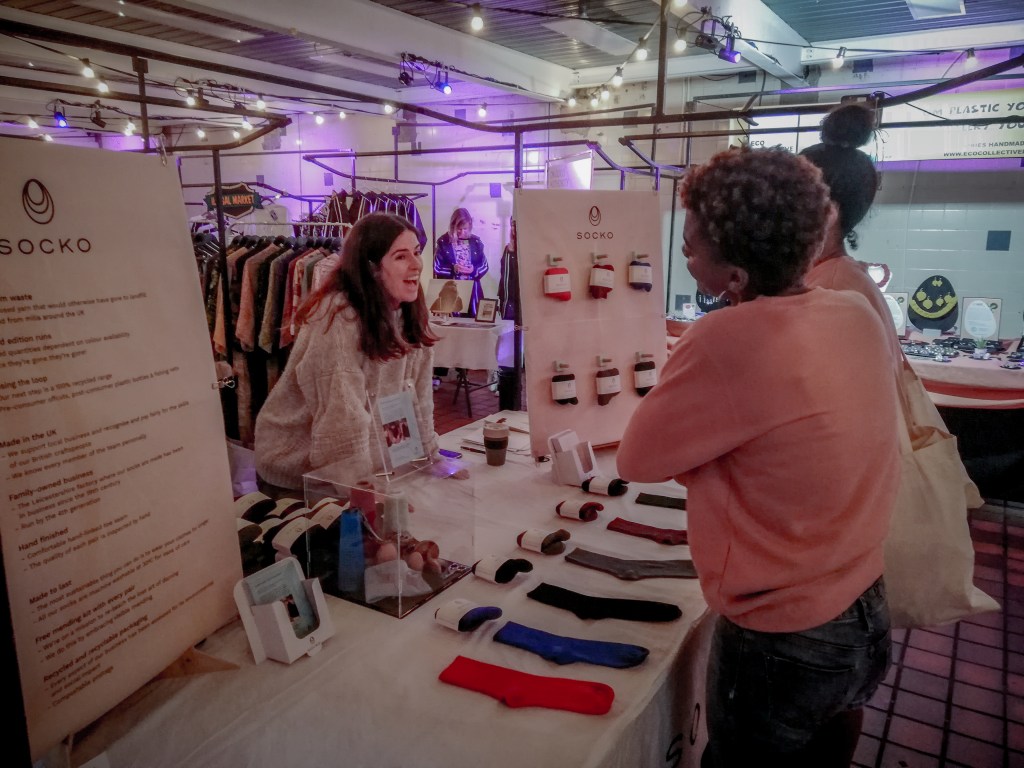
Socko at “Let’s slow down” in London

Where is your brand in ten years?

Great question. I would love to be supplying some of the high-street retailers, (and wish) that they’ll come round to the idea that it’s no longer a “nice to have” but actually a necessity to have sustainably made products. I would love to be able to have a business model that’s scalable enough that I can then do it at a price that will be beneficial to the environment and to the people who are currently being exploited.

Natural x Lab

Natural x Lab is a platform aiming to unite sustainable fashion brands, in order to challenge the power of mega-retailers. I met the founder, Indigo Goss, and asked her how that works.

What’s the inspiration behind your idea?

I’m a fashion editor for a suitcase magazine, and I’ve been in fashion the last twenty years. I started modelling at fourteen and then went into styling at 24. The amount of destruction and waste that there is in the industry is insane. When you’re younger, you don’t really notice it so much, and now it’s in the news and you hear more about it. So I was like, “Ok, I feel like I need to do something that’s actually making a difference.” And now, doing it, the more I look into it, the more terrifying it is. There are so many new brands coming up, and it’s nice to have my edit on a platform that hopefully looks good and is hopefully what people want, and just try and sell as much as possible.

How has the response on the platform been so far?

Really good, everyone so far really likes the aesthetic (I don’t know if they’re just being nice and kind)… Sales have been good. We launched last year in August, so Christmas was quite good, just before Christmas, which was really busy. We’ve literally just started up again in February, doing small work on the website in January.
It’s all self-funded. I’m new to building websites, SEO, digital marketing, so it’s a lot of learning how to do a lot of new things, but I think I’m getting there slowly.
Because I’ve got a background, obviously fashion stylist is good, I know a lot of photographers, so for me it’s quite easy to make the aesthetic look how I want it to look, which I think definitely helps. Through styling I know a lot of brands, that’s my job, to know all the brands, so it’s really helped sourcing everything.

So is the aim ultimately to take the big brands on board as well, or is it going to stay a sort of indie project?

A mix. A massive mix. I never take anyones full collection on, I just take a small edit of what I think works for the specific client I’m trying to push to.
Maybe not right now, but one day I would like to see myself as in between Liberty’s, Conran Shop, Browns: quite cool and artsy. So always, even if it is big brands, still having that aesthetic. Hopefully, that’s the plan. We’ll see how it goes.

The top 3 Christian Fashion Brands you need to know

There’s a lot of stuff out there calling itself Christian Fashion. But there’s also a couple of really good brands that are totally worth checking out.

This is our pick:

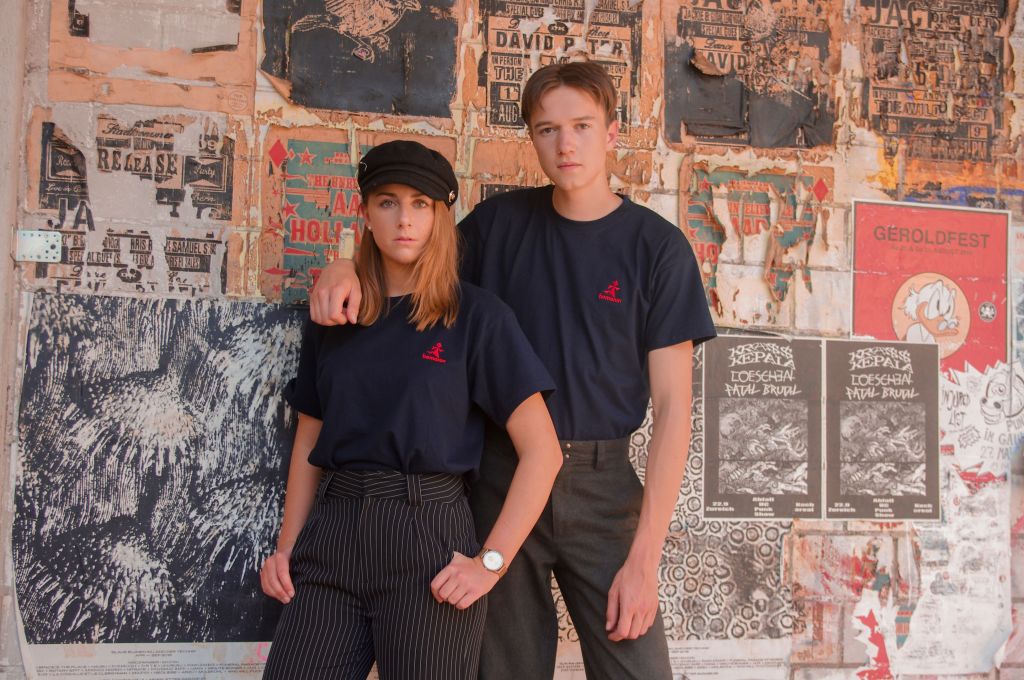
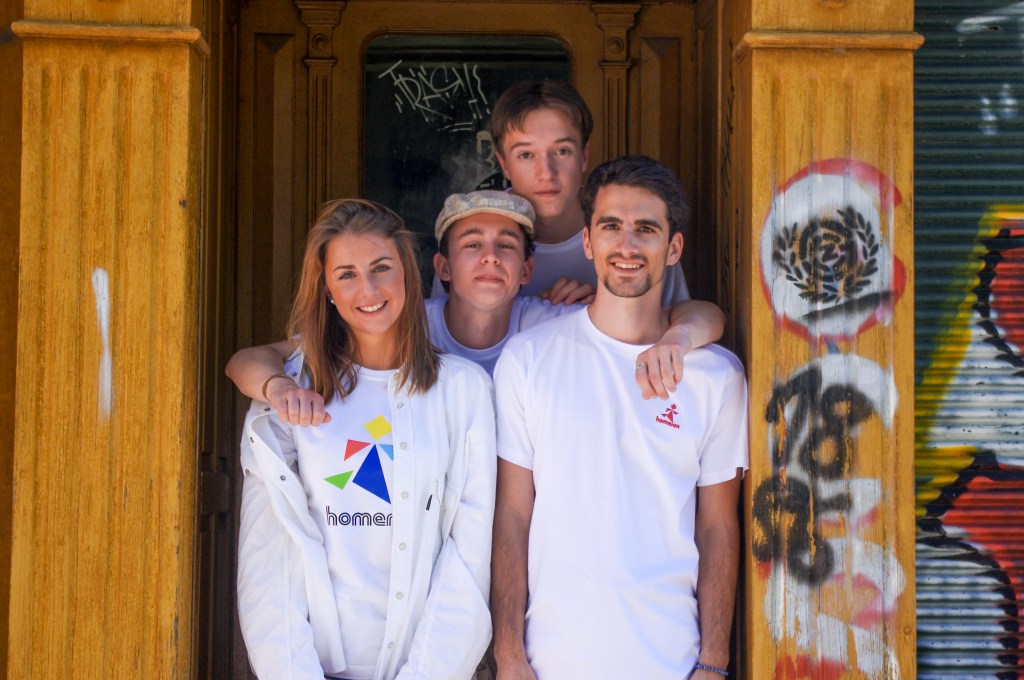
HOMERUN

For creatives who are ahead of the trend and want something they can really identify with, thehomerun.club is the go to.

“Born to inspire young people to run. To run for their lives, and for the lives of others.” Inspiring people on their walk (or Run) of faith and helping them express what they believe is the brands mission.

Their design is very poetic, with savvy slogans and mad, contemporary graphics, and it’s all fair trade.

Unspeakably good design, and refreshingly clear message is why the brand is our top pick.

Given the crazy images they put out, it’s surprising they have a fairly small social following, maybe due to their refusal to use fake followers: “This would go completely against what we believe,” said their creative director.

Design: 10 Message: 9 Content: 9

2. GOD THE FATHER CLOTHING

This brand has a large range of clothes, in a wide range of sizes, so it’s got something for everyone. The designs are mainly kept in black and white, so they go with anything.

The brand’s broad audience is expressed in a slightly larger social following, even though the content isn’t great.

We really like the clarity of the message and the goal of making it easier to talk about faith: “Trust me, I’ve been there,” says their founder.

Design wise the brand has some interesting stuff going on, a bit more on the grungy side.

Design: 7 Message: 7 Content: 5

3. NOBODY IS LOST

For those who really want to know where their stuff comes from, this brand is worth taking a look a at. Produced by 19 workers in Nepal, it’s all a bit more personal.

Their social following is very small, which adds to the local feel, we find.

Sadly, the message is quite unclear. Although the founder is reportedly a Christian, the content doesn’t really sound like it.

The designs are quite boring though, they look like what we’ve seen at H&M’s 5 years ago (or like what most Christian brands seem to be doing…)

Design: 4 Message: 2 Content: 5

All the comparing being done, we are really all one in Christ! It’s great to know that whichever brand we support, we are supporting brothers and sisters.