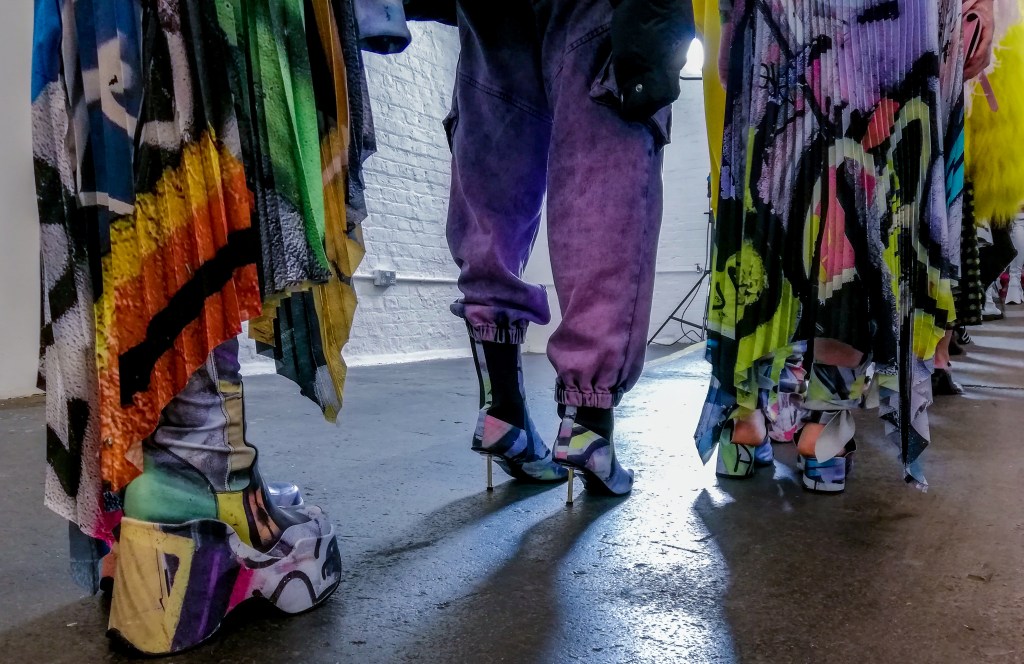
Autumn Winter 2020 collection
“Our inspiration is a continuous thing: We’re always obsessed with the idea of the “M’A girls”, the way they do their thing, where they go out, what they wear”, said Paolo Almeida after his show at LFW on February 15. “M’A girls” is what the brand calls the close community of followers it has built over the years, and they form an essential part of the brands purpose, and message. Last season the brand gave the beginning of the show to models and friends, to give their daughters something on the way for the future.
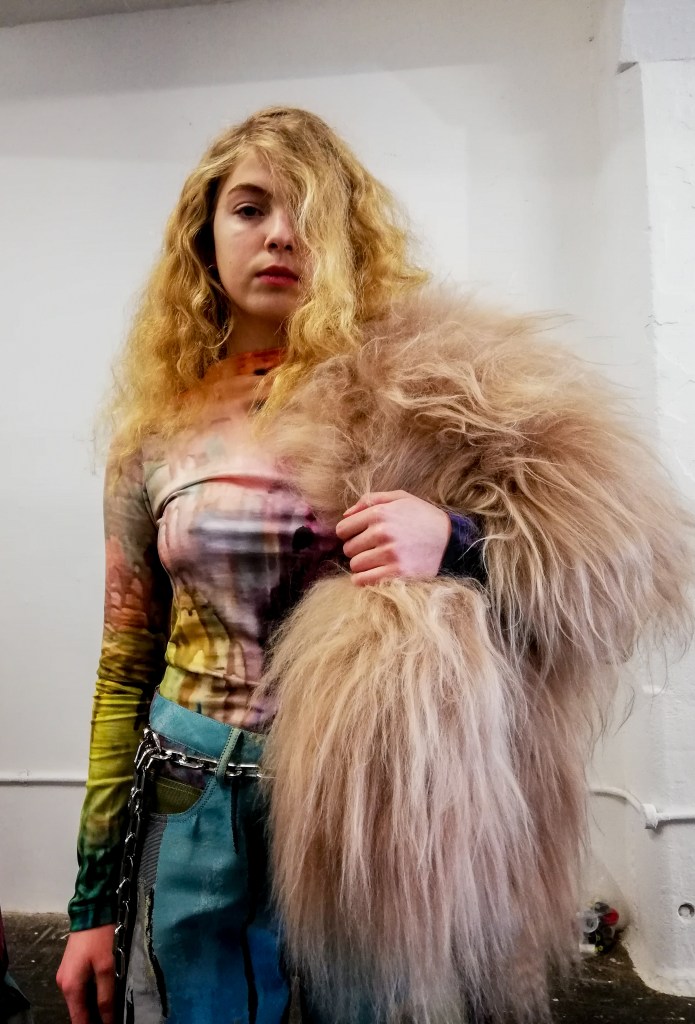
But it seems the designer-couple doesn’t just listen to the message it’s customers want to send, it also goes to the customer base for design inspiration. There’s a sort of circularity there. “We love having all these different personalities, putting them into a melting pot and coming up with a new story every season”, Paolo continues, explaining the variety of influences in the collection.
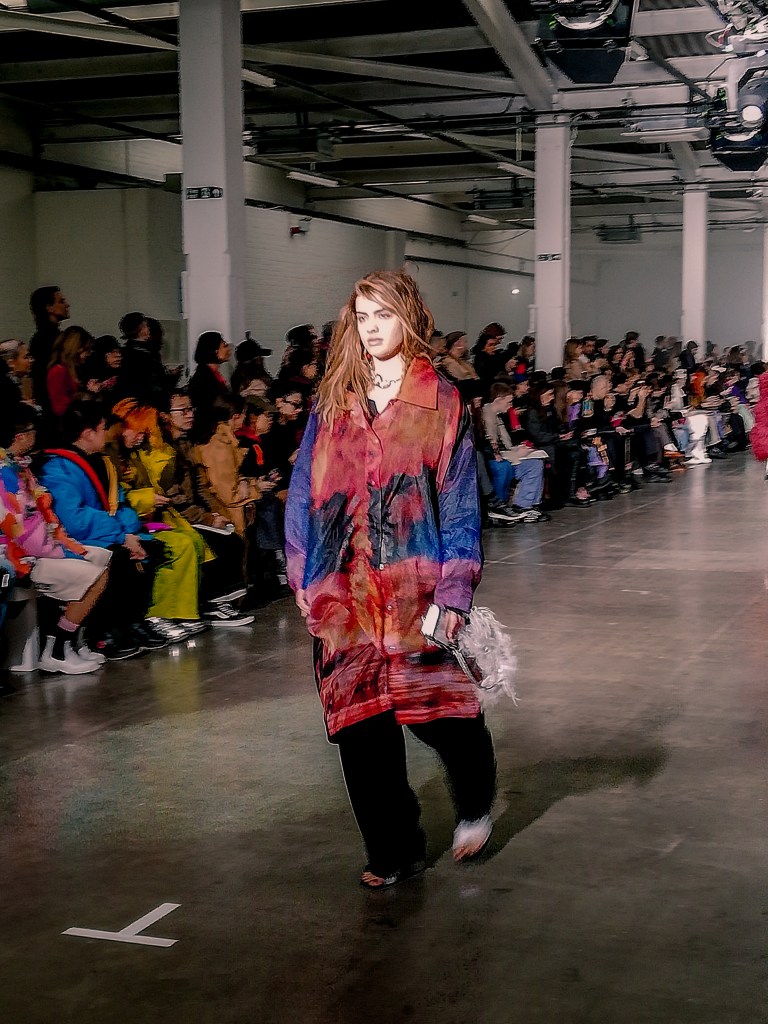
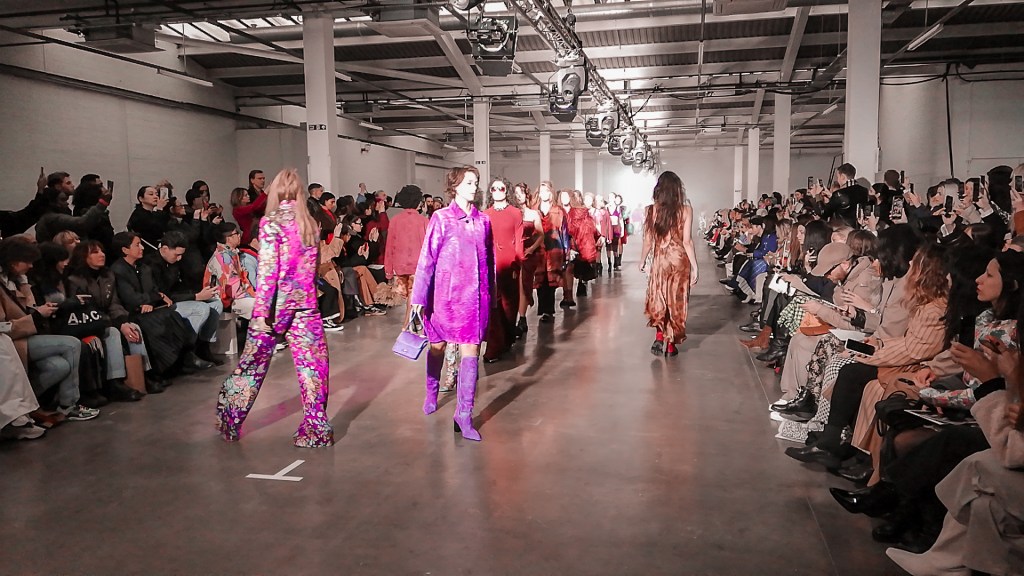
Starting off with simple silhouettes in a multicolour, custom-made jacquard, the collection goes on to a series of faded lilac and black pieces with graphic stripes. After that, elements of fur in acid tones, shredded and washed neon denim, multicolour airbrush prints are combined with shiny textures, translucent layers, asymmetric ruffles and platform boots to create a wildly youthful mix.
The make-up had a strong gloss and glitter to it, yet “done in a very Marques-Almeida way. It’s effortless, it’s a bit quirky and it looks easy”, comments the renowned make-up artist Terry Barber – a longstanding relation to the brand and part of the “family”, according to Paolo. The designer describes Terry’s makeup for the show as “something you could do yourself at home, nothing super professional-looking.” With this, he sums up the shows source of beauty in general. Sure, there was a large amount of glamour, but it never felt superficially elegant. Was it the slightly unpolished motions of the street-cast models, or their distinct features? Each of them seemed to radiate genuine personality, as they appeared out of the mist, accompanied by a resounding version of Pachelbel’s Canon.
As the designer of a young and optimistic brand, I felt like Paolo would maybe have a comment on the future of fashion. But when I asked him about it, immediately the instinctive guilt that most of the big brands have seemed to well up, the awareness of working in a plagued industry that shouldn’t be able to exist in its present form. Paolo’s promise: “We’ll try to do whatever we can to improve the fashion world, (…) to make the best out of this industry.” What’s the message fashion will have in the future? “Hopefully a better message. Being more inclusive, more sustainable, that kind of stuff really.”
Now I almost felt guilty myself, having forced these PR-buzzwords out of a designer who just wanted to create beautiful clothing. After all, in fashion there doesn’t always have to be a political after-taste. We loved the show, we loved the fashion, and we can admit that, even if it’s part of a despicable industry. But even so, this can be said: five of the looks where made out of plastic taken out of the ocean, imprinted with the remark: “It’s actually really important too.”
 Life with Extra Fashion